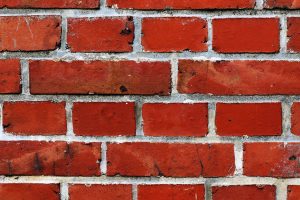
When it comes to safe private home construction or major home renovation, the choice of core materials determines not only structural durability but also family comfort for decades to come. One of the most time-tested solutions remains construction brick – a material that combines strength, resistance to external factors, and predictable performance characteristics.
Brick is a classic. But classics require understanding.
Today, we will examine which properties truly matter, how to make an informed choice of building materials, and in which cases construction brick remains the optimal solution in terms of safety and long-term durability.
Why Construction Brick Remains the Foundation of Safe Building
In today’s market – where composite panels, lightweight blocks, and modular systems are rapidly emerging – construction brick continues to hold a stable position. The reason is simple: it offers predictable structural strength and reliable load-bearing behavior.
Construction brick is most commonly made from red clay, fired at approximately 1,800°F (1,000°C). This firing process creates a dense internal structure resistant to moisture, mechanical stress, and temperature fluctuations. This is particularly important for safe construction in climates with freeze-thaw cycles and high humidity (common across Northern Europe and many U.S. states).
In practical terms, safe construction means:
- Foundation stability
- No structural cracking in load-bearing walls
- Fire resistance
- Minimal long-term deformation
Brick meets these requirements due to:
- High compressive strength
- Non-combustibility (Class A fire-rated in the U.S.; Euroclass A1 in the EU)
- Environmental neutrality
- Resistance to biological impact (mold, pests)
In both the U.S. and EU, compressive strength is classified differently:
- U.S. standards (ASTM C62 / ASTM C216): Measured in psi (e.g., 3,000–8,000 psi typical structural brick range)
- EU standards (EN 771-1): Measured in MPa (e.g., 10–40 MPa common structural range)
Additionally, many bricks feature textured surfaces or frogs (indentations), improving mortar adhesion. This structural detail increases masonry reliability and reduces delamination risk over time.
Construction Brick in Home Renovation: Where It Is Truly Irreplaceable
During major home renovation, reinforcing or replacing load-bearing elements often becomes essential. In this context, construction brick offers application flexibility that large-format panels or monolithic blocks cannot match.
Brick is selected where precision geometry, high load-bearing capacity, and localized reconstruction without large-scale demolition are required.
Primary applications include:
- Foundations for small structures
- Load-bearing and interior walls
- Partition construction
- Fireplaces and stoves
- Reinforcement of openings and corner zones
Brick is particularly valuable in partial reconstruction of older buildings. Damaged masonry sections can be carefully replaced without disrupting the building’s structural logic – a clear engineering advantage.
Before starting renovation with brick, conduct a structural assessment of walls and foundations. Then select brick strength grade and freeze-thaw resistance appropriate for the regional climate.
Choosing Building Materials: What to Consider When Buying Brick
Selecting building materials is not just a budget decision. It is a strategic choice that affects safety, energy efficiency, and long-term operating costs.
Key parameters to evaluate:
1. Compressive Strength
- EU classification: M75, M100, M125, M150, M200 (or expressed in MPa)
- U.S. classification: Based on ASTM minimum compressive strength (psi rating)
For low-rise residential construction:
- EU recommendation: Not lower than M125–M150
- U.S. recommendation: Minimum 3,000 psi for structural applications
2. Freeze-Thaw Resistance
- EU: F25, F50, F100 (number of freeze-thaw cycles)
- U.S.: Severe Weathering (SW), Moderate Weathering (MW), Negligible Weathering (NW) per ASTM
For exterior walls in colder climates, higher freeze resistance (F50+ or SW rating) is strongly recommended.
3. Geometry and Surface Integrity
- No chips or cracks
- Uniform dimensions (important for mortar joints – typically 3/8 inch in the U.S., 10 mm in the EU)
4. Color Uniformity
Even coloration indicates proper firing and production consistency.
In our view, material selection determines up to 60% of a building’s future reliability. Early-stage mistakes often cost significantly more than investing in higher-quality brick from the outset.
Aesthetics and Practicality: Is Additional Finishing Necessary?
If exterior walls are built with high-quality facing brick and precise masonry, additional cladding may not be required. Brick itself provides a visually stable and timeless façade.
However, in modern home renovation, combined systems are common:
- Stucco (render)
- Decorative cladding
- Insulated wall systems (EIFS in the U.S.; ETICS in the EU)
Brick serves as a reliable structural core capable of supporting additional finishing layers.
Why is brick easy to finish?
Its textured surface and proper mortar adhesion create excellent bonding conditions for plaster and finishing systems.
Some clients ask whether brick is still relevant in the era of rapid construction technologies. The answer depends on priorities. If durability, fire safety, and structural stability are central to the project, construction brick remains a rational choice – even today… and that is not an exaggeration.
Conclusion
Construction brick is not merely a traditional material – it is a foundational solution for safe construction and major home renovation. Its strength, environmental neutrality, and versatility make it highly relevant in today’s building materials market.
With proper material selection, correct strength grading, appropriate freeze resistance, and adherence to masonry standards, brick ensures long-term structural performance without loss of integrity.
Safety begins with the foundation.
That is why, in projects focused on durability and resilience, construction brick continues to play a key role across both U.S. and European markets.